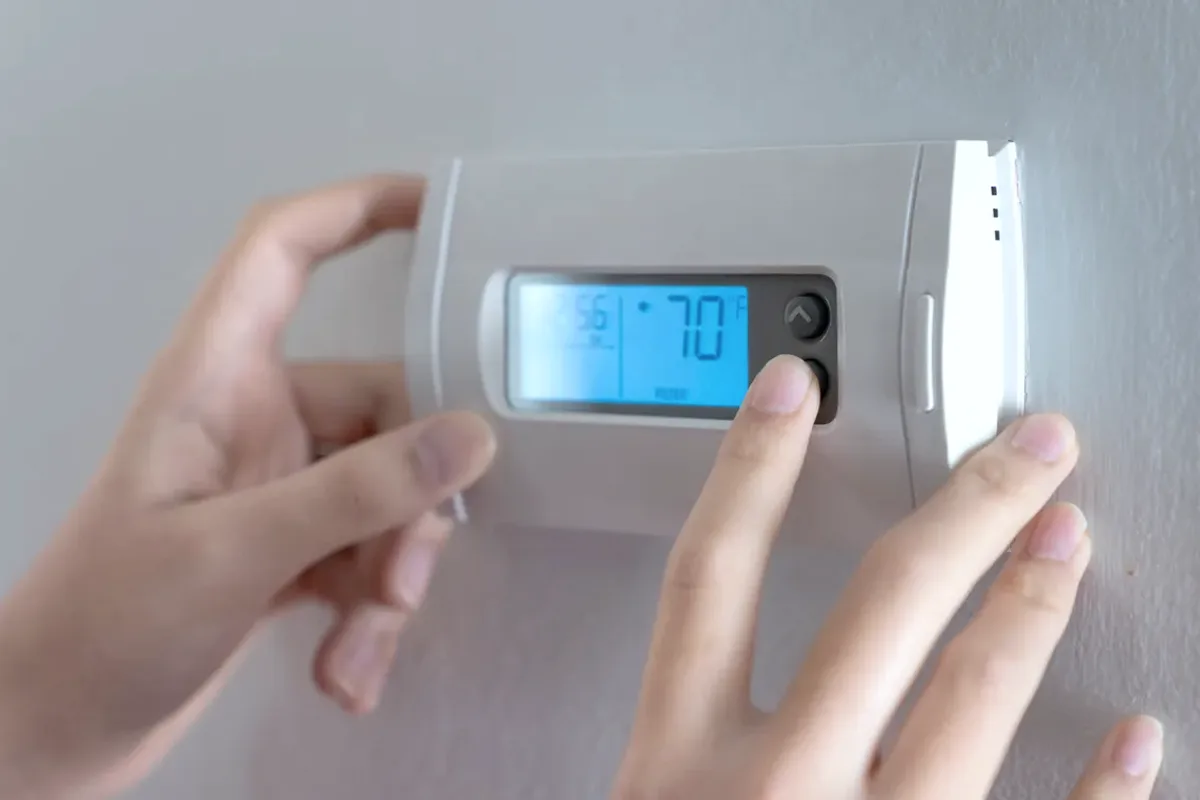
Request thermostat repair & replacement for a property in Lakeshore. Include the equipment, the problem or planned work, and your location so the request can be reviewed.
What heating or cooling equipment does the thermostat control, and what symptom does it show?
A thermostat that will not turn on, displays an unexpected temperature, short-cycles equipment, or loses remote connection may have a control, sensor, wiring, battery, or network issue. The right diagnosis depends on whether it serves a furnace, boiler, mini-split, or zoned system and whether the control is compatible with that equipment. Repair can address a confirmed fault; replacement is a separate choice when condition, features, or compatibility call for a different control.
Record the thermostat model, the equipment it controls, the displayed symptom, and whether the problem affects one or several zones. An assessment can compare the control’s signals with wiring, sensors, relays, batteries, and network behavior where relevant. Compatibility matters because a thermostat that suits one furnace or boiler may not support a mini-split or zoning arrangement. Findings help distinguish a repair from a replacement need.
Thermostat wiring, batteries, sensors, and relays
Smart thermostat network and remote-control issues
Equipment compatibility and repair-versus-replacement choices
Assessment and Scope
Questions for the Proposed Work
01
Diagnose the control, sensor, or connection
A blank display, inaccurate reading, short cycling, or dropped connection can point to different faults. Batteries, wiring, sensors, relays, and network settings may be relevant, but the symptom alone does not prove which one has failed. The thermostat’s relationship to the heating or cooling equipment should also be checked, since a control signal and an equipment fault can produce similar symptoms. Internal electrical checks should be left to appropriate service procedures.
02
Match replacement controls to the equipment
A replacement thermostat should support the equipment’s control requirements, including relevant heating and cooling stages or zoning functions. A smart or programmable model is not automatically compatible with every furnace, boiler, or mini-split. Remote features also depend on network and model requirements. Before replacement, establish which equipment the control operates and which functions are actually needed; this avoids treating a feature upgrade as a substitute for compatibility checks.
03
Repair or replace based on findings
Repair may be appropriate when assessment identifies a correctable issue such as a failed sensor or connection. Replacement becomes a separate option if the thermostat is damaged, no longer suitable for the equipment, or cannot provide needed controls. For a smart thermostat with a network problem, the issue may be connection or configuration rather than failed hardware. Compare the confirmed fault, compatibility, and intended functions before deciding whether to repair or replace.
Compare the next step
Plan control wiring and sensor locations alongside the equipment design, then confirm the final wall and room use before closing finishes. Ask who connects and configures the controls after construction. The handover should demonstrate normal heating and cooling operation rather than stop at powering up the display. Agree on who documents the final equipment configuration and which wiring remains accessible. If the renovation changes room use or partitions, confirm that the finished sensor locations still serve the agreed control plan.
Thermostat wiring is not universal. Do not connect wires by colour alone or work on energized wiring; a compatible control must be configured for the equipment it serves.